Missing teeth can affect more than your smile. They may also affect how you chew, speak and feel in everyday life. For many patients, the decision often comes down to two common tooth replacement options: dentures and dental implants.
Both dentures and implants can replace missing teeth, but they work in very different ways. The right option depends on your oral health, bone condition, lifestyle, budget and long-term goals.
This guide compares dentures vs implants in simple language to help you understand the key differences before speaking with a dental professional.
What Are Dentures?
Dentures are removable dental appliances designed to replace missing teeth and surrounding gum tissue.
They may be used when a patient has lost several teeth or all teeth in the upper jaw, lower jaw or both. Dentures can help restore appearance, support facial structure and improve chewing and speech.
- Have multiple missing teeth
- Want a non-surgical tooth replacement option
- Are looking for a more affordable upfront option
- Have significant bone loss
- Need a removable appliance
There are two main types of dentures: full dentures and partial dentures.
Full dentures are used when all teeth in the upper jaw, lower jaw or both need to be replaced. They sit on the gums and can usually be removed for cleaning and overnight storage.
Partial dentures are used when some natural teeth remain. They may attach to nearby teeth with clasps or other connectors to help keep them in place.
Modern dentures are designed to look more natural than older styles. However, they may take time to adjust to, especially when eating and speaking.
What Are Dental Implants?
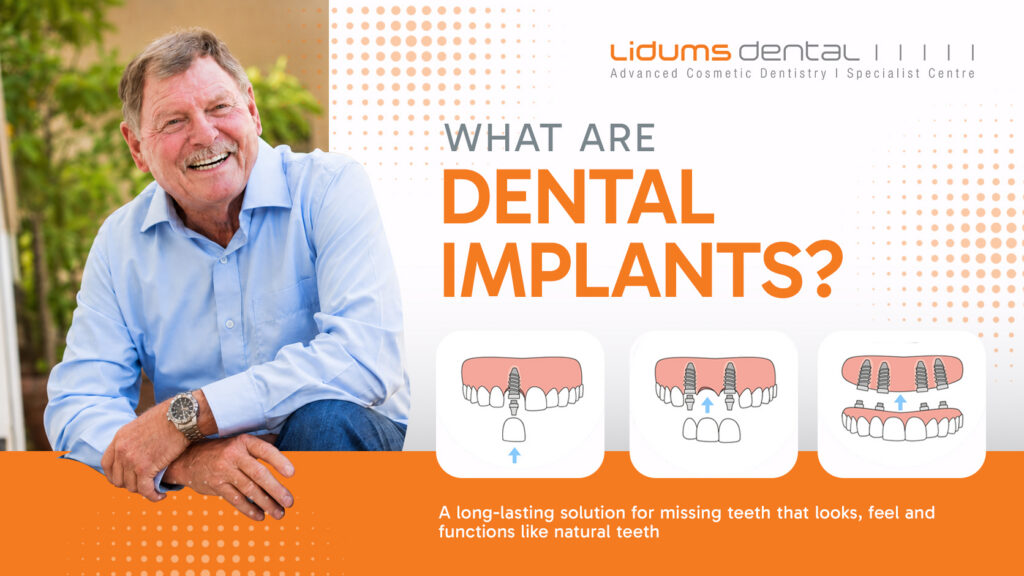
Dental implants are fixed tooth replacement options. They involve placing small posts into the jawbone to act as artificial tooth roots.
Once the implant has healed and integrated with the bone, a crown, bridge or denture can be attached. This can create a more stable and fixed solution compared with traditional removable dentures.
- One missing tooth
- Several missing teeth
- A full arch of missing teeth
Implant treatment usually involves a surgical procedure and a healing period. For some patients, the process may take several months. Suitability depends on bone volume, gum health, general health, oral hygiene and other individual factors.
Some patients prefer implants because they can feel more stable and secure, particularly when eating or speaking. However, implants are not suitable for everyone, and a consultation is needed to assess whether they are appropriate.
Dentures vs Implants: Key Differences
The table below summarises the main differences between dentures and dental implants.
| Factor | Dentures | Dental Implants |
| Comfort | Removable and may take time to adjust to | Fixed and often feels more stable |
| Stability | May move slightly when eating or speaking | Anchored into the jawbone for greater stability |
| Appearance | Can restore the appearance of missing teeth | Can look and feel closer to natural teeth |
| Chewing ability | May require some food adjustments | Usually provides stronger chewing support |
| Maintenance | Removed daily for cleaning | Brushed and flossed like natural teeth, with regular dental care |
| Longevity | May need adjustment or replacement over time | Can last many years with proper care |
| Cost | Lower upfront cost | Higher upfront cost |
| Treatment process | Usually faster | May take several months due to surgery and healing |
Benefits of Dentures
Dentures remain a common tooth replacement option because they are removable, non-surgical and usually more affordable upfront than dental implants.
- More affordable upfront cost
- No surgical procedure required
- Faster treatment process
- Suitable for some patients with significant bone loss
- Easier to adjust or replace over time
Dentures may be a practical option for patients who want to replace multiple missing teeth without surgery. They may also be suitable for people who are not ready for implant treatment or who have medical or oral health factors that make surgery unsuitable.
However, dentures may feel different from natural teeth. Some patients experience movement, rubbing or difficulty with certain foods, especially during the adjustment period.
Benefits of Dental Implants
Dental implants are often chosen by patients who want a fixed and stable tooth replacement option.
- Stronger stability when eating or speaking
- A more fixed feel compared with removable dentures
- Natural-looking appearance
- Support for the jawbone
- Long-term durability with proper care
- Improved chewing function for many patients
Because dental implants are placed into the jawbone, they may help stimulate the bone in a way that removable dentures do not. This can help reduce bone shrinkage in the area of missing teeth.
However, implants involve surgery, require sufficient bone support and usually have a higher upfront cost. They also require good oral hygiene and regular dental maintenance.
Are Dentures or Implants Better?
There is no single answer that suits everyone.
Dentures may be more suitable for patients who want a removable, non-surgical and more affordable upfront option. Dental implants may be more suitable for patients who want a fixed option with greater stability and long-term function.
- Number of missing teeth
- Gum health
- Bone density
- Bite condition
- General health
- Budget
- Lifestyle
- Long-term treatment goals
A dental consultation is the best way to compare your options properly. Your dentist can assess your oral health and explain which treatments may be suitable for your situation.
Can You Combine Dentures and Implants?
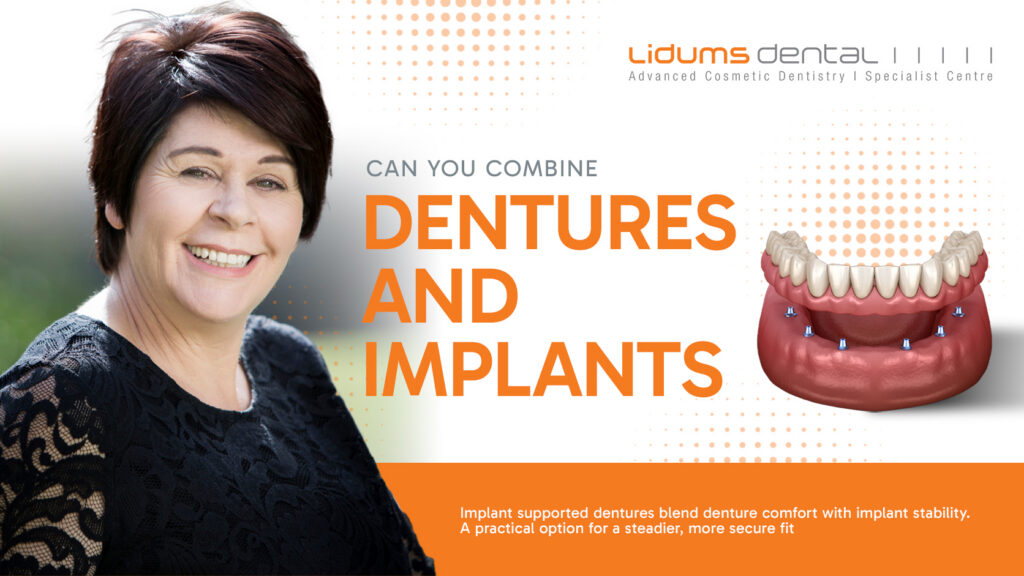
Yes. Some patients may benefit from implant-supported dentures.
Implant-supported dentures use dental implants to help stabilise a denture. This can reduce movement and provide a more secure feel compared with traditional dentures.
This option may be useful for patients who want more stability but do not need or cannot proceed with individual implants for every missing tooth.
Implant-supported dentures can offer a balance between the affordability of dentures and the stability of implants. Suitability depends on bone condition, oral health and individual treatment goals.
When to See a Dentist
If you are comparing dentures and implants, a professional assessment can help you understand which option may suit your needs.
- Your remaining teeth
- Gum health
- Jawbone condition
- Bite alignment
- Missing tooth areas
- Medical history
- Treatment expectations
- Budget and maintenance needs
They can also explain the benefits, limitations, costs and likely treatment process for each option.
Book a Tooth Replacement Consultation
If you are missing one tooth, several teeth or a full arch of teeth, you do not need to make the decision alone.
Book a consultation with an experienced dental professional to discuss dentures, dental implants and other tooth replacement options. A personalised assessment can help you understand what may be suitable for your oral health, lifestyle and long-term goals.